
Active Programs

-
Recognizing the complexity involved in identifying successful solutions alongside their critical enabling factors, to empowering stakeholders in replicating, scaling, or enhancing existing models, FSF, has taken to addressing this challenge in collaboration with partners including grocery retailers, academics, advocates, and policymakers, in a phased approach.
Phase One began with a comprehensive landscape study aimed at identifying the diversity of successful grocery retail operations in under-resourced communities and understanding the key factors that contribute to their success. The findings from this study have been compiled into a report available here.
In Phase Two, the Phase One findings came to life. FSF brought together the essential actors from across the ecosystem for the Grocery Retail for All Summit, an event Co- hosted by FSF, The Global Food Institute at George Washington University and Chef José Andrés to discuss challenges and advancements in expanding access to retailers in all communities.
This work laid the foundation for the Grocery Retail Executives Corps (GREC), a national mentorship and technical assistance program designed to support new and existing grocers operating in under-resourced communities.
In 2026, we convene again at the Grocery Retail for All Summit—bringing together experienced leaders across retail, supply chains, finance, and policy to ensure emerging solutions are practical, capital-aligned, and built to last.
Grocery Retail For All: Affordable Nutritious Food in Every Neighborhood
-
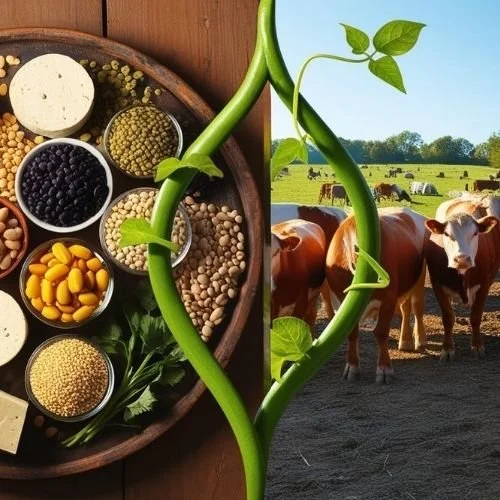
An All-Protein Climate Strategy was conceived in partnership with the Environmental Defense Fund (EDF) to overcome this divide. It positions all protein sources, conventional and complementary, not as competitors but as allies in reducing emissions, enhancing resilience, and ensuring equitable nutrition. By building trust, aligning policies, and scaling innovation, the initiative seeks to “bend the curve” of agricultural methane emissions while sustaining diverse protein systems worldwide.
The objective is to enable a climate-resilient protein system that reduces methane emissions, sustains livelihoods, and secures global nutrition.
Since the project launch in early 2025, FSFI and EDF have made measurable progress:
Convening & Engagement Outcomes: Earth Day Global Webinar (April 2025)
World Food Prize Borlaug Dialogue Panel (Oct 2025)
COP30 High-Level Convening
All-Protein Climate Strategy

-
FSFI is addressing these knowledge gaps through an initiative designed to increase demand for nutritious dairy foods among low-income consumers by identifying the key barriers and motivators that shape their purchasing decisions in grocery retail settings.
Low-Income Consumer Demand for Nutritious Dairy Products

-
On the other hand, 33% of children under five years are stunted (2020) and the population consumes the least protein in the region. The Government of Rwanda has committed to reducing this rate to 19% by 2030 with a focus on increased consumption of animal source protein. Animal-source foods, including eggs, are highly digestible and nutrient-dense sources of protein. Eggs, in particular, are rich in essential nutrients, which are often lacking in the diets of malnourished individuals.
An innovative integrated commercial egg industry has taken root in Rwanda and was ripe for scaling before the COVID-19 pandemic but widespread closures in the hospitality sector diminished the demand for eggs, resulting in a business continuity crisis for egg producers. Small producers without markets lacked financial resources to purchase feed, putting their operations and the commercial sector at risk. And closed boarders caused a decline in egg prices, affecting the livelihoods of small-scale poultry producers.
Against this backdrop, Food Systems for the Future, with support from the Eleanor Crook Foundation, partnered with the Rwandan Ministry of Agriculture to address these challenges faced by poultry producers. The project aimed to ensure business continuity for egg producers and provide nutritious food to over 20,000 vulnerable households who had lost their income and were affected by distribution disruptions.
In collaboration with the Rwanda Ministry of Agriculture and the National Early Childhood Development Program (NECDP), FSF ensured weekly deliveries of eggs to vulnerable households in the Bugesera district. Not only did this help maintain business operations and protect the livelihoods of egg producers but also provided a vital source of high-quality protein to a population in need during the pandemic. FSF protected the supply chain of six egg producers and approximately 24 associated jobs.
The collaboration enabled FSF to analyse the bottlenecks in the poultry value chain. Affordable animal feed was identified as the main impediment to scaling affordable animal source foods due to high prices of imported soy and maize, the primary feed for poultry. FSF concluded that there’s demand from local feed manufactures to replace conventional feed inputs with a local sustainable alternative protein feed solution and is in the interest of Rwandan consumers. From there on, FSF began exploring alternative solutions that would result in increased production and affordability of animal-source foods and help Rwanda achieve its Sustainable Development Goals.
The Rwanda Insect Protein Facility
Past Programs

-
Potlikker Capital funded Food Systems for the Future (FSFI) to conduct a first-of-its-kind analysis of midstream financing and infrastructure gaps: Bridging the Midstream Gap: Unlocking Capital and Infrastructure for U.S. Specialty Crop SMEs.
This report establishes a clear investment and policy thesis for one of the most underleveraged segments of the U.S. food system: the midstream—aggregation, storage, processing, and distribution.
The analysis moves the Institute from diagnosis to architecture. The strategic question before us is whether we remain a thought leader in this space or move into activating the capital and policy pathways outlined in the report.
Midstream Initiative

-
We mapped existing MMRV solutions and data to identify trends and key gaps and conducted interviews with over 75 key stakeholders across the agricultural value chain to gather insights on use cases, desired features, needs, and challenges. Based on these findings, we developed hypotheses for the building blocks of a low-cost, sufficient-fidelity MMRV system. The results of these efforts were compiled into a White Paper, available here.
In addition, at the World Food Prize Borlaug Dialogue, we hosted a side event, which highlighted the critical role of a standardized, affordable, and high-fidelity MMRV system in driving the transition to sustainable agriculture.
MMRV Systems: Unlocking Private Finance to Transform Global Agri-food Systems

-
Our toolkit aims to be relevant across the food system value chain and for diverse private financiers throughout the asset lifecycle. At present our toolkit includes a pre-investment screening tool to assist in triaging pipeline companies based on a business's breadth of efforts to improve nutrition and a dynamic due diligence tool to provide a quantitative deep dive into fundamental and supporting business activities impacts on nutrition.
These tools are accompanied by supporting tools to assist users with limited nutrition knowledge, including a comprehensive dictionary and an expanded tool for defining nutritious foods at various points in the food system value chain.
The success of this impact measurement and management toolkit relies on their adoption and widespread use, so we intend for them to become a public good.
At present, we are engaging with academics, investors, and folks from the industry to validate the methodology and enhance the user experience
Nutrition Impact and Measurement Management Framework

-
First, we are making investments to increase the consumption of animal source protein – like eggs – that are easy to prepare and digest, packed with nutrients to reduce malnutrition, and have been linked with lower rates of stunting.
Second, we are identifying alternative ingredients for costly poultry and fish feed to accelerate the growth of these industries.
Third, we are transforming the inefficient household waste management system which currently significantly contributes to environmental degradation.
FSF activities in Rwanda are backed by strategic partnerships and supported by the Seeding the Future Global Food System Challenge Award. Together with the Government of Rwanda, City of Kigali, Protix Ltd. – the world’s largest producer of insect protein – and an established Rwandan Agri-entrepreneur who ran the largest feed facility in the country, FSF is building Africa's first ever automated black solider fly facility in Rwanda.
FSF Africa recognizes the immense potential of insect protein as an innovative substitute for conventional animal feed which is currently costly, import-dependent and subject to price fluctuation. Replacing these conventional feeds with a local sustainable alternative not only addresses the financial burden faced by poultry and fish farmers but also offers a circular solution to the growing food waste problem.
The impact of the black soldier fly facility will go beyond efficient feed production. A valuable byproduct of the larvae production is frass biofertilizer, which has a potential to increase crop yields while preserving soil health, and improve productivity of vegetables, cereals and specialty crops.
By upcycling organic waste, reducing the cost of animal feed for producers, and facilitating the scaling-up of commercial poultry and fish industries in Rwanda, through this first-of-its-kind facility, FSF is paving the way for wider access to affordable, high-protein animal source foods.
Rwanda COVID-19 + Nutrition Response Support
